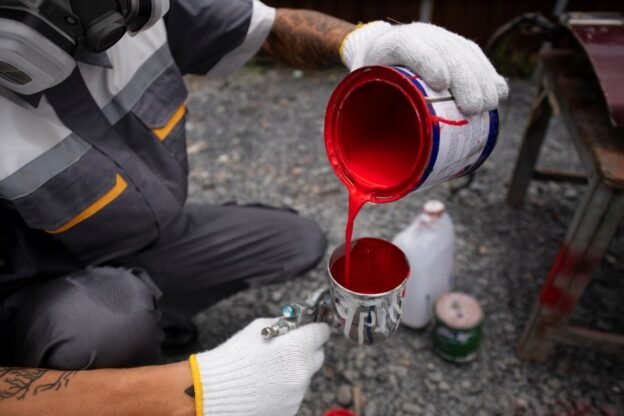
A steel water tank in Jebel Ali lasted eleven months before the coating started peeling like sunburnt skin. Eleven months. The contractor had used a standard exterior paint the kind that works fine in milder climates, and the Gulf sun tore through it faster than anyone expected. That’s the story we hear more often than you would think when clients come to us looking for a reliable Industrial Paints Supplier UAE teams can actually trust.
UAE weather does not play nice with regular coatings. Summer surface temperatures on metal and concrete can cross 60°C. Add humidity, salt air near the coast, and sandstorms that sandblast every exposed surface and you have got one of the harshest coating environments on the planet. This blog walks through what actually matters when picking industrial paint here, what mistakes cost people money and how to avoid repeating them.
Why Standard Paint Fails in the Gulf
Most paint failures in the UAE are not about bad application. They are about picking the wrong product for the job in the first place.
UV degradation breaks down resin binders faster in this region than almost anywhere else. A coating rated for tropical climates elsewhere might still underperform against Dubai’s intensity. Thermal cycling is another quiet killer. Surfaces expand under 45°C heat and contract at night and coatings without enough flexibility crack along these stress lines within a year or two.
Then there’s salt. Coastal projects in Abu Dhabi, Dubai Marina or Fujairah face constant salt-laden air that accelerates corrosion on unprotected or poorly coated steel. Add dust storms that abrade surface films and you have got a perfect storm for premature coating failure.
None of this is new information to engineers who have worked here a while. But it still surprises a lot of first-time developers and even some experienced contractors moving in from other regions.
What Makes a Coating “Climate Ready”
A coating built for UAE conditions typically needs a few non-negotiable properties. This is not marketing talk it’s what actually holds up on real sites. UV resistance comes first. Look for coatings with high-quality UV stabilizers, usually acrylic- or polyurethane-based that resist chalking and fading.
Thermal flexibility matters just as much. The coating needs to expand and contract with the substrate without cracking, especially on metal roofing, tanks and structural steel. Corrosion protection is critical for anything near the coast or exposed to humidity. Epoxy primers paired with polyurethane topcoats are a common combination for a reason they work.
Chemical and abrasion resistance matters for industrial facilities, warehouses and parking structures where surfaces face constant wear, spills or exposure to chemicals. A quick way to think about it: if a coating cannot survive a Dubai rooftop in July without cracking or fading within two years, it’s not fit for purpose here.
Matching the Coating to the Project Type
Different structures need different approaches and this is where a lot of buyers go wrong. They treat paint as one category instead of a system built around the surface.
For structural steel and tanks, a three-coat system (zinc-rich primer, epoxy intermediate, polyurethane topcoat) is the industry standard for long-term corrosion protection. This is what’s typically specified for oil and gas facilities, marine structures and large storage tanks across the region.
For concrete and masonry, elastomeric or acrylic waterproof coatings work better since they handle thermal movement and resist efflorescence that white chalky residue you sometimes see on older buildings.
For roofing, reflective coatings that reduce surface temperature are gaining traction fast, partly for durability and partly for energy savings on cooling loads. Some studies from regional building councils have shown reflective roof coatings can lower surface temps by 15 to 20 degrees compared to dark, unreflective surfaces, which genuinely helps HVAC efficiency too.
The Sourcing Problem Nobody Talks About
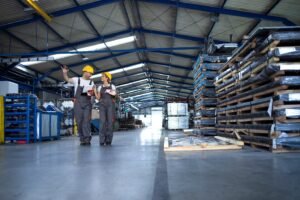
Something that does not get discussed enough. Even the best coating formulation fails if it’s stored wrong before application. Paint sitting in an unshaded container yard for weeks under direct sun degrades before it ever touches a wall. Batch inconsistency is another quiet issue, where two tins from the same batch behave differently because of poor handling upstream.
This is really a supply chain problem dressed up as a product problem. Working with an established building materials trading company that manages proper storage, batch tracking and fast turnaround protects the coating’s integrity long before application day. It’s one of those things that seems minor until a project gets delayed because paint arrived compromised.
We have seen contractors save weeks of rework simply by sourcing through a trading partner who understands regional storage requirements rather than ordering blind from a catalog.
Practical Advice Before You Order
A few things worth checking before locking in a supplier for your next job:
- Ask for the technical data sheet and confirm UV and temperature ratings match your project’s exposure level.
- Request batch and storage documentation, especially for large orders
- Confirm the supplier can provide both primer and topcoat systems together, mismatched systems are a common cause of premature failure.
- Check delivery timelines against your project schedule since paint applied outside recommended humidity or temperature windows will not cure properly.
Small checklist, big impact. Skipping even one of these has derailed projects we have watched from the sidelines.
Why Reliable Construction Materials Supply UAE Matters More Than People Think

Paint quality is only half the equation. The other half is getting consistent, verified stock when your project timeline demands it. Reliable Construction Materials Supply UAE partners reduce the guesswork offer proper documentation and understand which formulations genuinely perform in local conditions versus which ones just claim to.
A trusted Building Materials Supplier UAE does not just hand over a tin of paint. They help match the right product to the right surface, climate exposure and project type and that guidance often saves far more money than the paint itself costs.
Conclusion
Choosing industrial paint in the UAE is not about picking the most expensive can on the shelf. It’s about understanding heat, humidity, salt and dust and matching a coating system that’s actually built to survive them. Get the surface prep right get the coating system right and source through a partner who takes storage and quality seriously.
That last part is where Layra comes in, helping contractors and developers across the UAE source dependable industrial paints and coatings built for this exact climate.
FAQs
What type of paint lasts longest in UAE’s climate?
Polyurethane topcoats paired with epoxy primers generally offer the best combination of UV resistance, flexibility, and corrosion protection for UAE conditions, especially on steel and coastal structures.
How often should industrial coatings be reapplied in the UAE?
Depending on exposure and quality, most industrial coatings need reapplication every 5 to 8 years, though coastal or high-UV areas may require earlier maintenance checks.
Why do standard paints fail faster in Gulf countries?
Intense UV exposure, extreme thermal cycling, high humidity, and salt-laden air combine to break down standard coatings much faster than in milder climates.
How do I choose a reliable industrial paints supplier in the UAE?
Look for suppliers who provide proper technical documentation, controlled storage conditions, matched primer-topcoat systems, and consistent batch quality rather than just competitive pricing.